
Discovering Bath
Twenty-five stops across Bath, on three routes you can switch between as you walk. Highlights takes in the must-sees in about ninety minutes, Explorer adds more to explore, and Beyond is everything, including the off-the-beaten-track corners most visitors walk straight past. Roman springs, Georgian showmanship, a yellow front door that went to a government minister, and a hillside the whole city was quarried from.
- 1 h 30 min to 5 h
- 8 to 25 stops
- English
- £4.99
Pick a route. Change your mind halfway.
Twenty-five stops across Bath, on three routes you can switch between as you walk. Highlights takes in the must-sees in about ninety minutes, Explorer adds more to explore, and Beyond is everything, including the off-the-beaten-track corners most visitors walk straight past. Roman springs, Georgian showmanship, a yellow front door that went to a government minister, and a hillside the whole city was quarried from.
The must-sees
The Pump Room, the Roman Baths, the Abbey, Guildhall Market, Pulteney Bridge, the Theatre Royal, the Circus, and Royal Crescent
Highlights plus more to explore
Everything on the Highlights route, plus Abbey Green and Sally Lunn's, and Bath Street and Thermae Bath Spa, with more stops on the way
Everything, including the off-the-beaten-track stops
Everything on the Explorer route, plus the Herschel Museum and the Victoria Art Gallery, with more stops on the way
Times are estimates: the average walking time between stops plus each stop’s audio played in full. The audio on its own is shorter.
The stops
A taste of each stop. The full stories play when you get there.
The must-sees
-
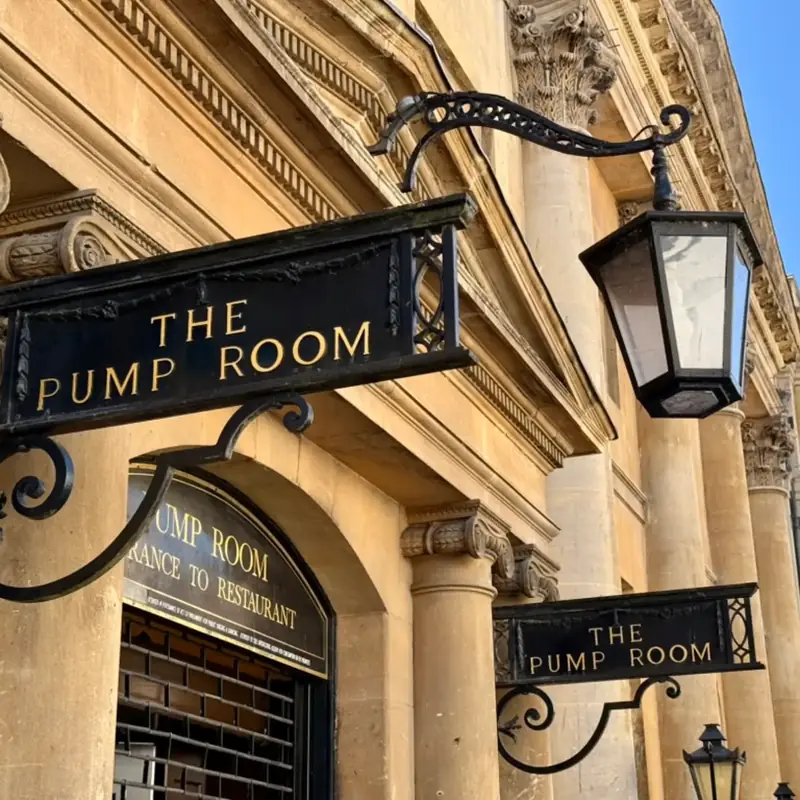
The Pump Room
A Georgian pump room built over a Roman spring, where the mineral water still flows and afternoon tea is still served.
-
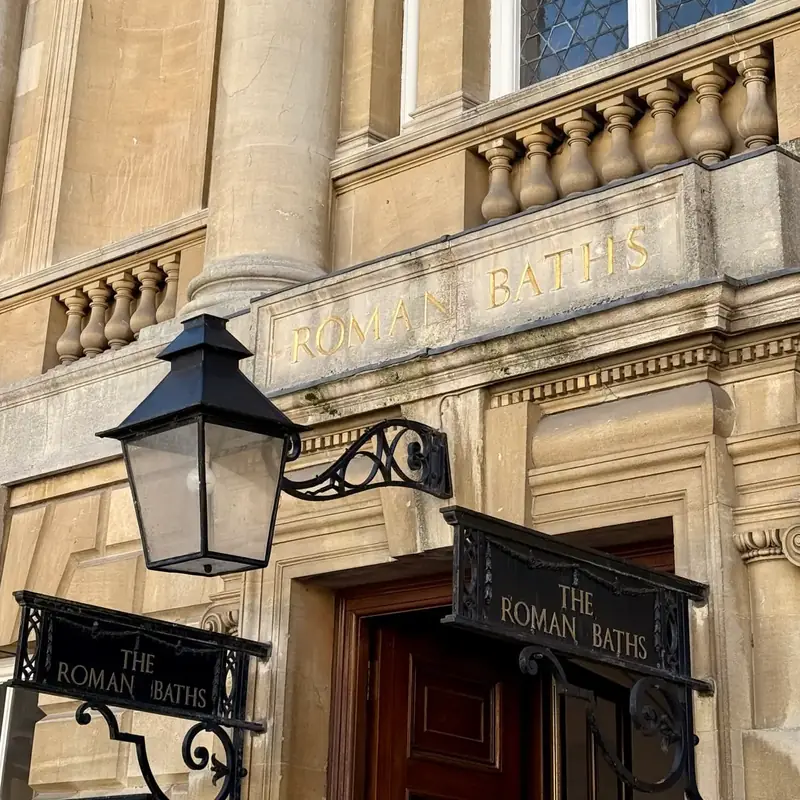
The Roman Baths
One of the best-preserved Roman spas anywhere in the empire, almost all of it below street level.
-
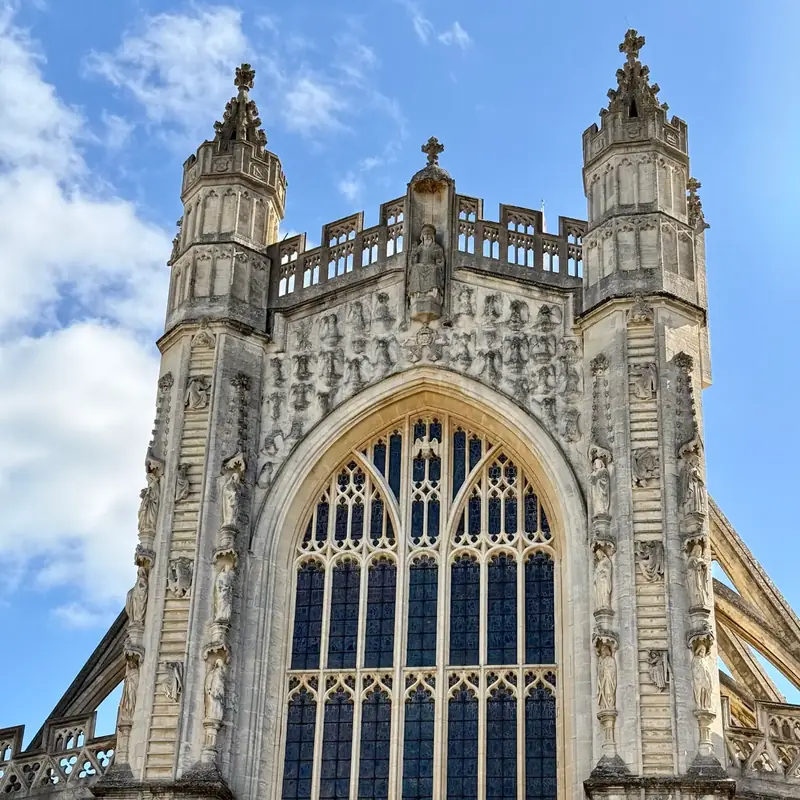
The Abbey
A church that took three hundred and fifty years to finish its own stone ceiling, with angels still climbing its west front.
-

Guildhall Market
A covered market trading on this spot for centuries, with a stone pillar said to have given English its phrase for paying on the nail.
-
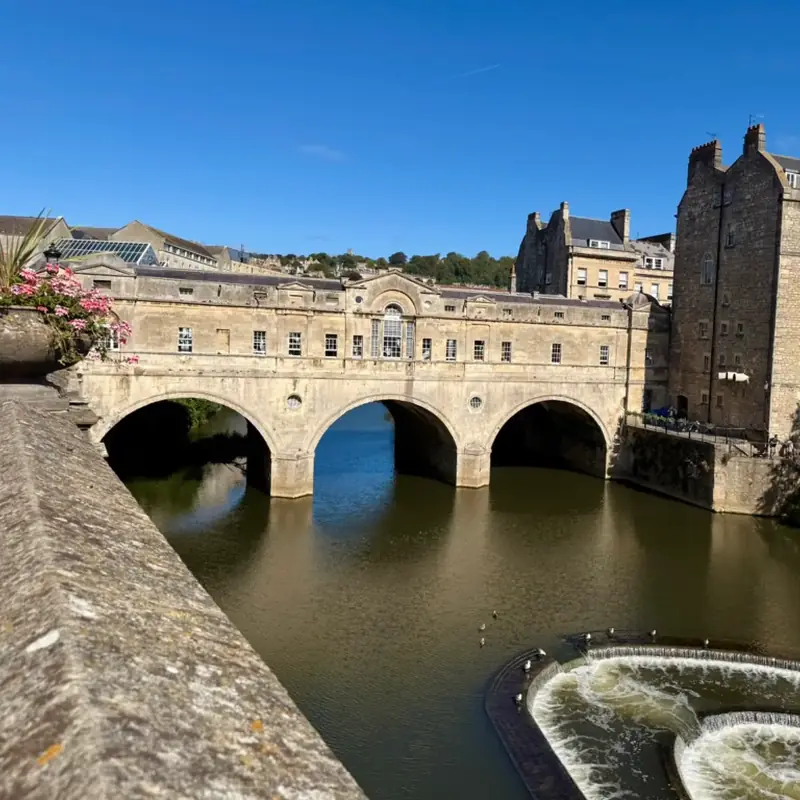
Pulteney Bridge
One of only four bridges in the world lined with shops on both sides, with a photogenic weir younger than it looks.
-
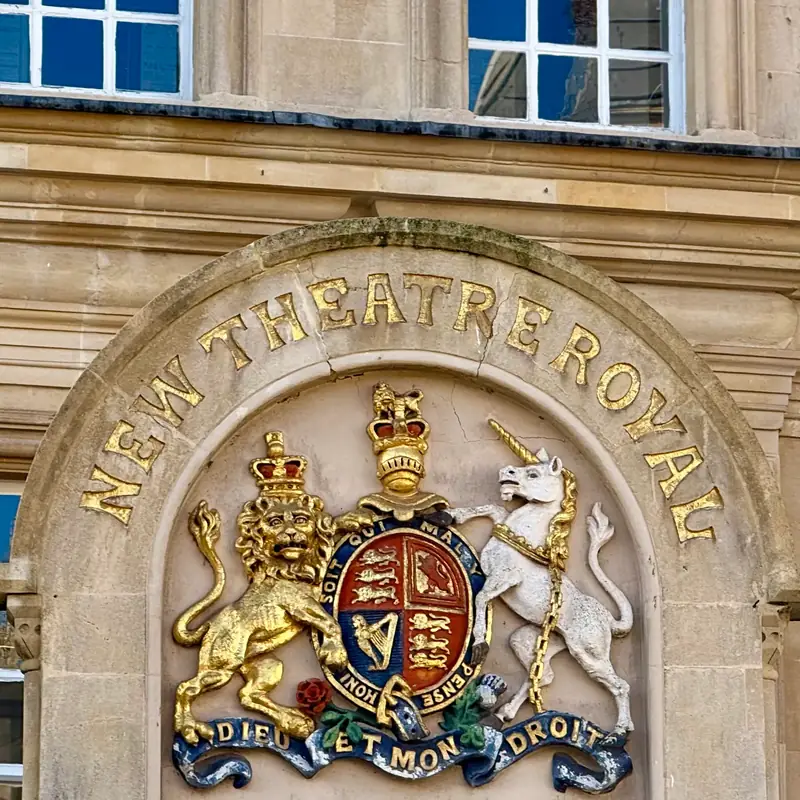
Theatre Royal
Bath's working theatre since 1805, rebuilt after a fire, and still said to be watched over by its own resident ghost.
-
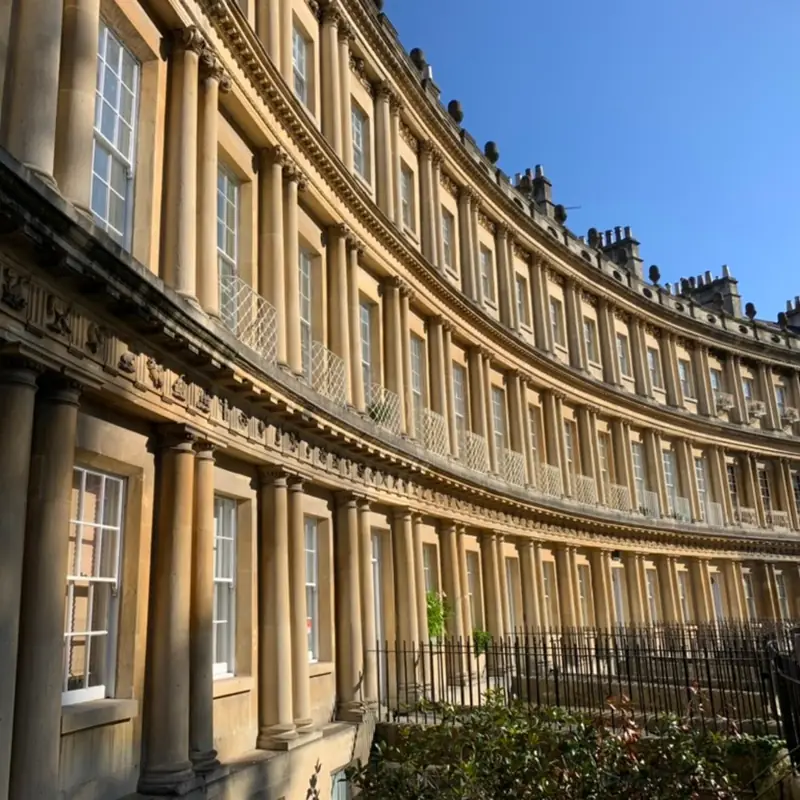
The Circus
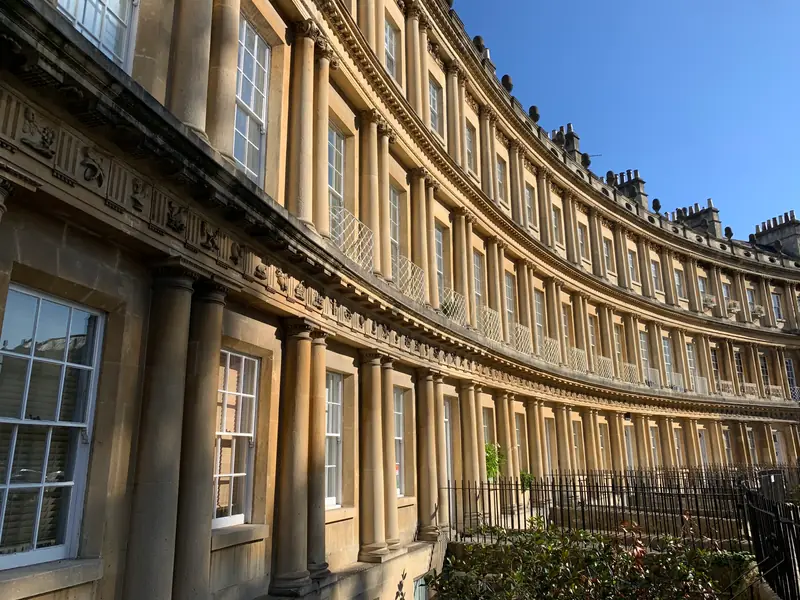
A near-perfect ring of Georgian townhouses, carved with hundreds of mysterious emblems and a nod to Bath's founding legend.
-
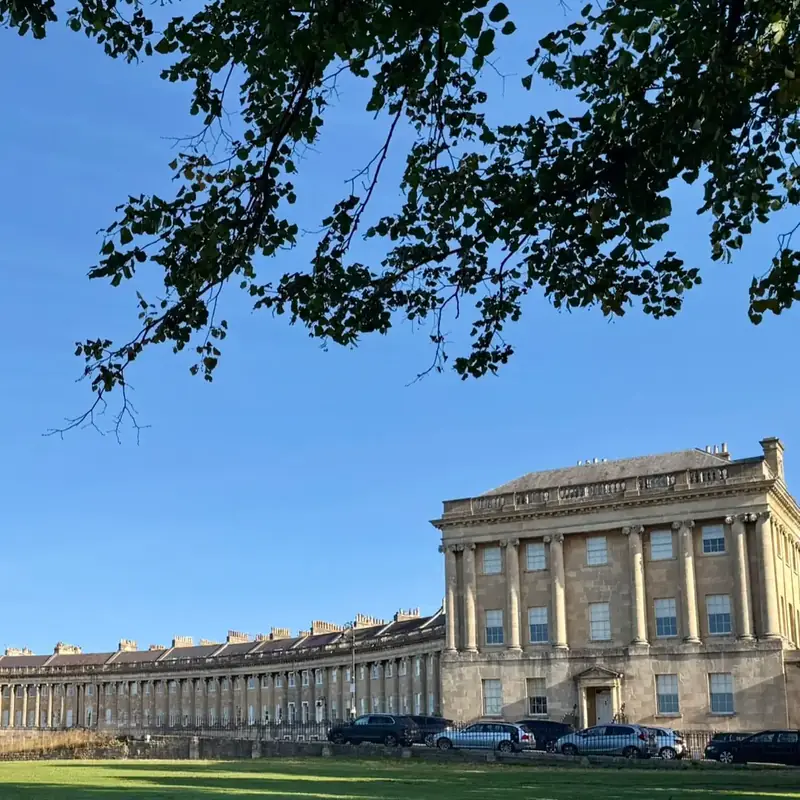
Royal Crescent
Thirty houses behind one unbroken sweep of columns, doubling on screen for eighteenth-century London.
Highlights plus more to explore
-
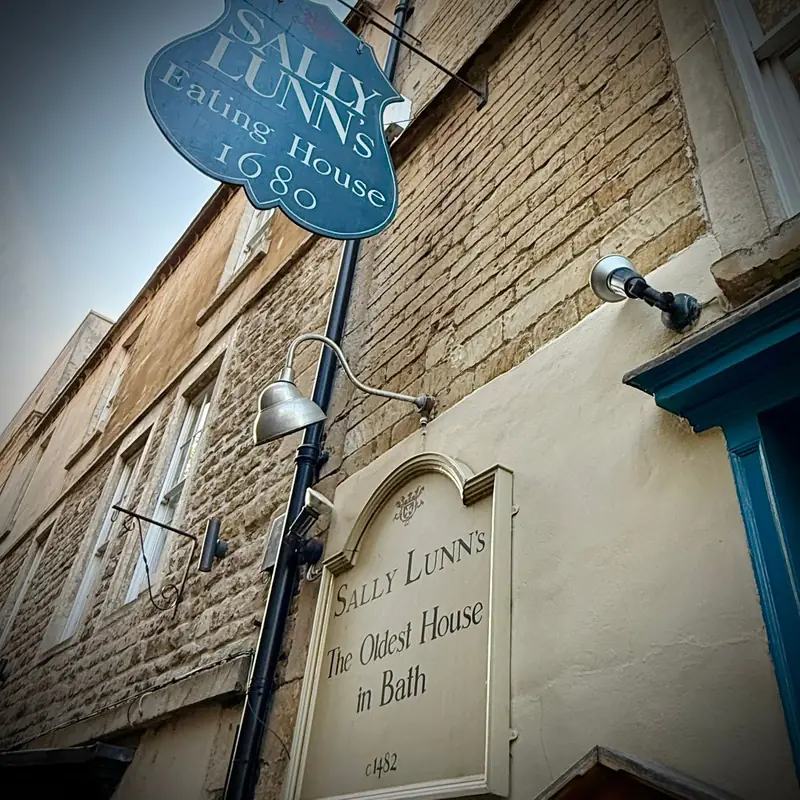
Abbey Green and Sally Lunn's
A quiet square that sat inside the monks' priory for centuries, with Sally Lunn's, one of Bath's oldest houses and still a working café, round the corner.
-
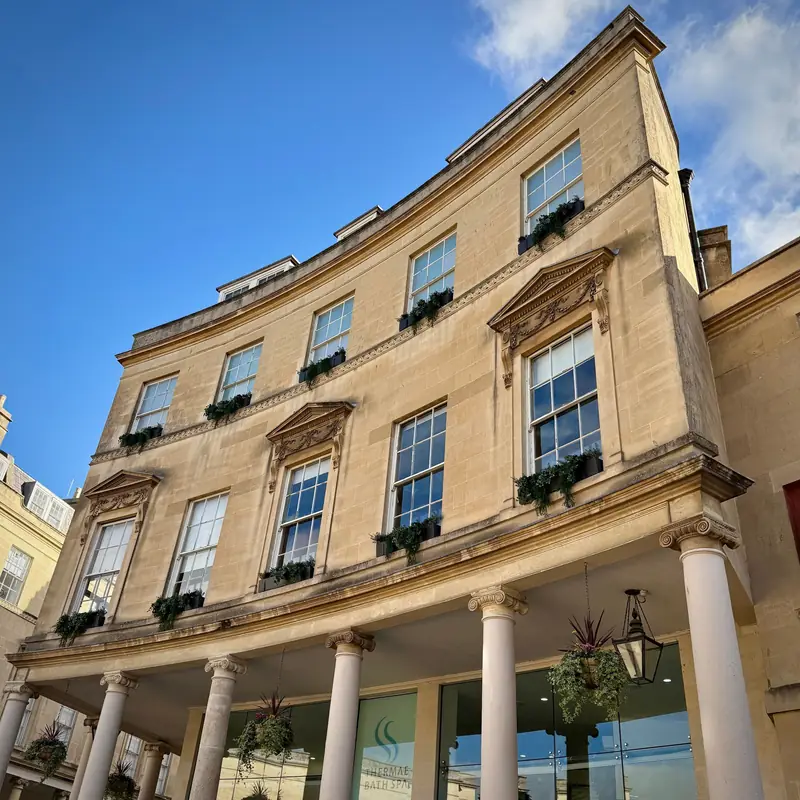
Bath Street and Thermae Bath Spa
A colonnaded Georgian street between the baths, with Thermae Bath Spa's rooftop pool and the little open-air Cross Bath.
-
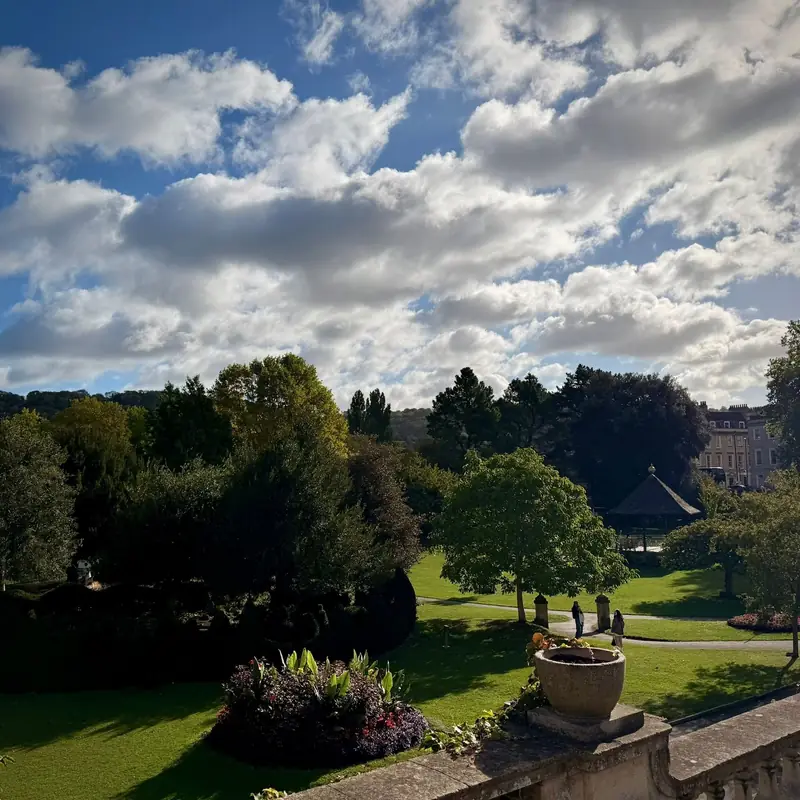
Parade Gardens
Sunken riverside gardens below Grand Parade, with the best low-level view of Pulteney Bridge and its weir.
-
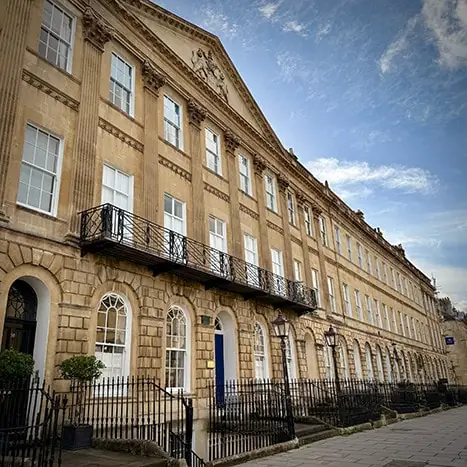
Great Pulteney Street
Thomas Baldwin's boulevard of 1789, a hundred feet wide, each side built as one long palace front.
-
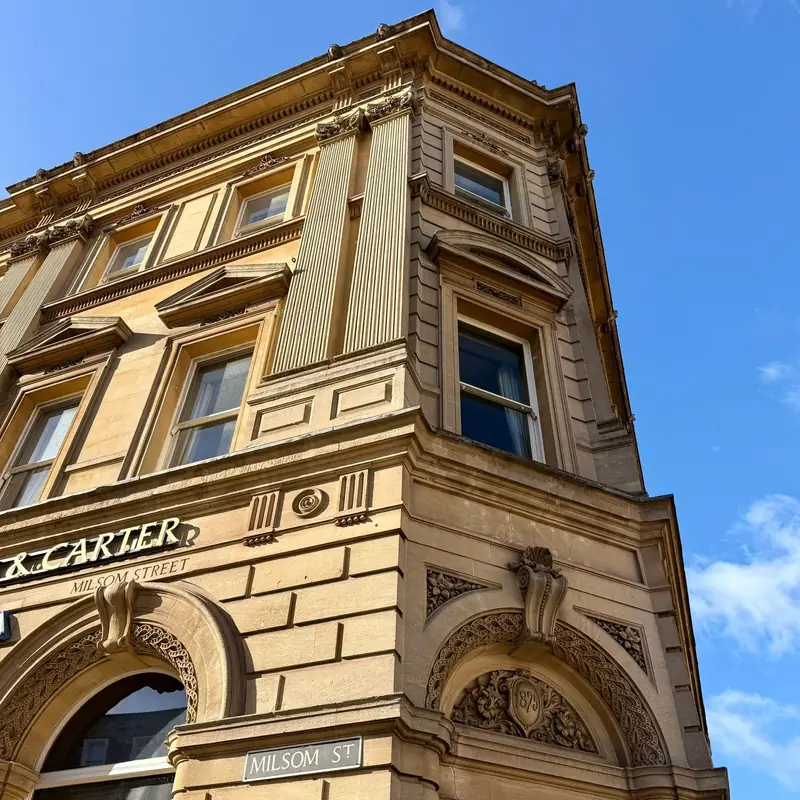
Milsom Street
Bath's smartest shopping street, with the Georgian townhouses still standing above the shopfronts.
-
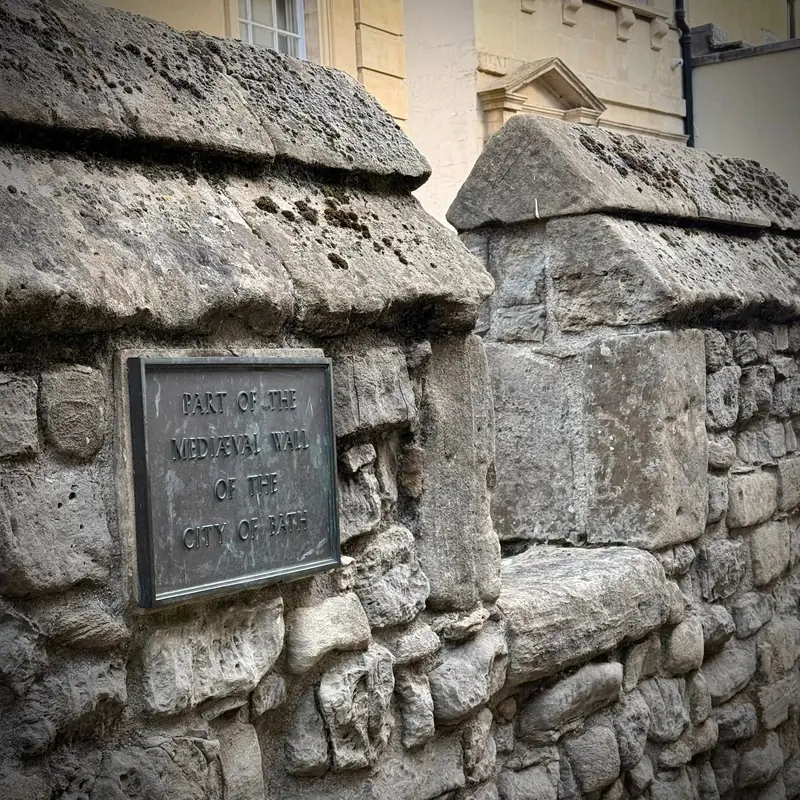
Upper Borough Walls
A surviving stretch of the medieval city wall, facing the former Mineral Water Hospital.
-
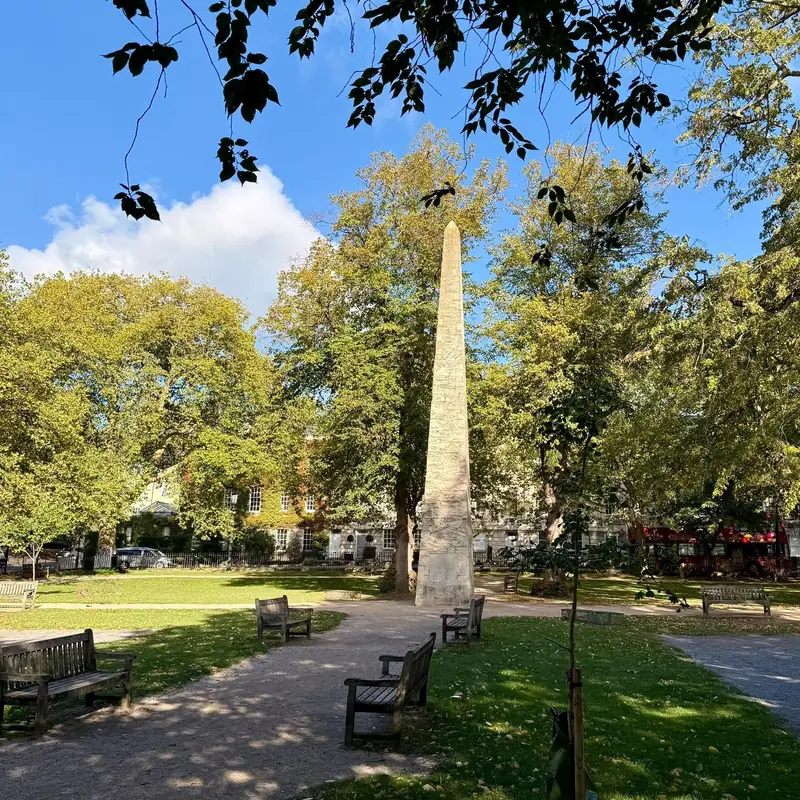
Queen Square
John Wood the Elder's first big development, where seven houses hide behind a single palace front.
-
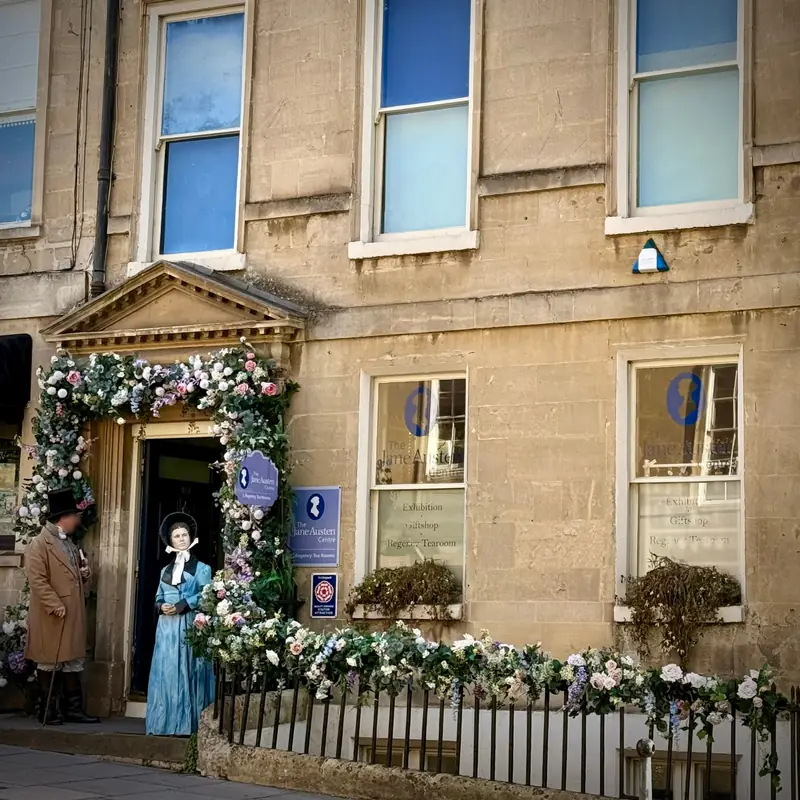
The Jane Austen Centre
The Austen exhibition at 40 Gay Street, a few doors from the house where she lodged in 1805.
-
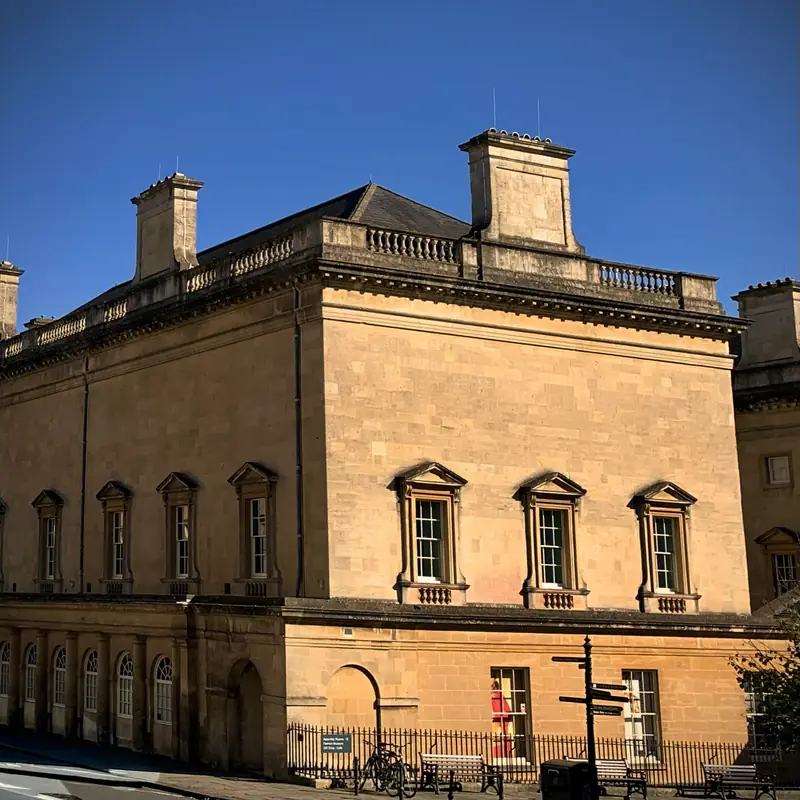
The Assembly Rooms
Wood the Younger's Upper Rooms of 1771, where Georgian Bath came to dance. Closed for works until 2027.
Everything, including the off-the-beaten-track stops
-
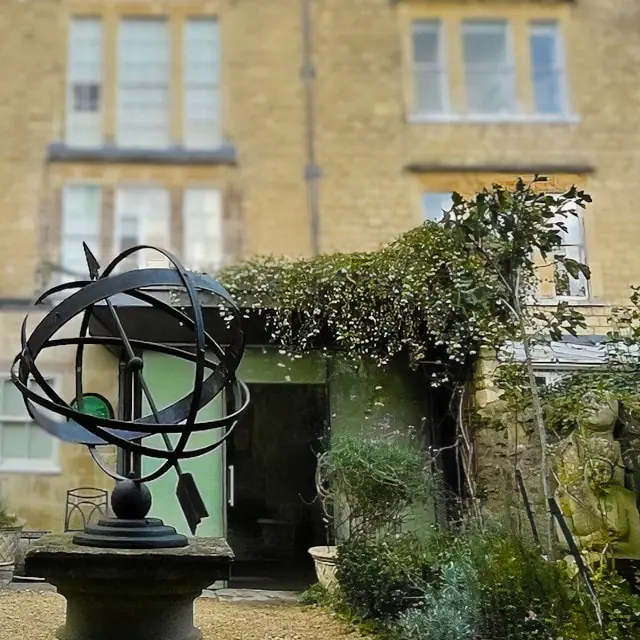
The Herschel Museum
The ordinary terraced house where a musician and self-taught astronomer discovered Uranus from his back garden in 1781.
-
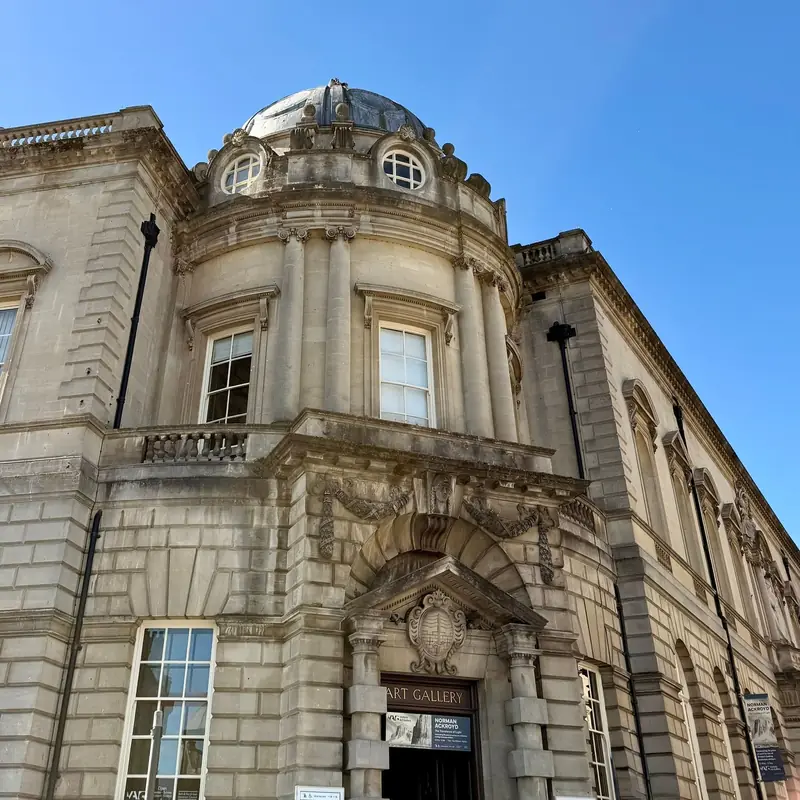
The Victoria Art Gallery
Bath's art gallery, built for Queen Victoria's Diamond Jubilee, with a free upper gallery hung in the old style.
-
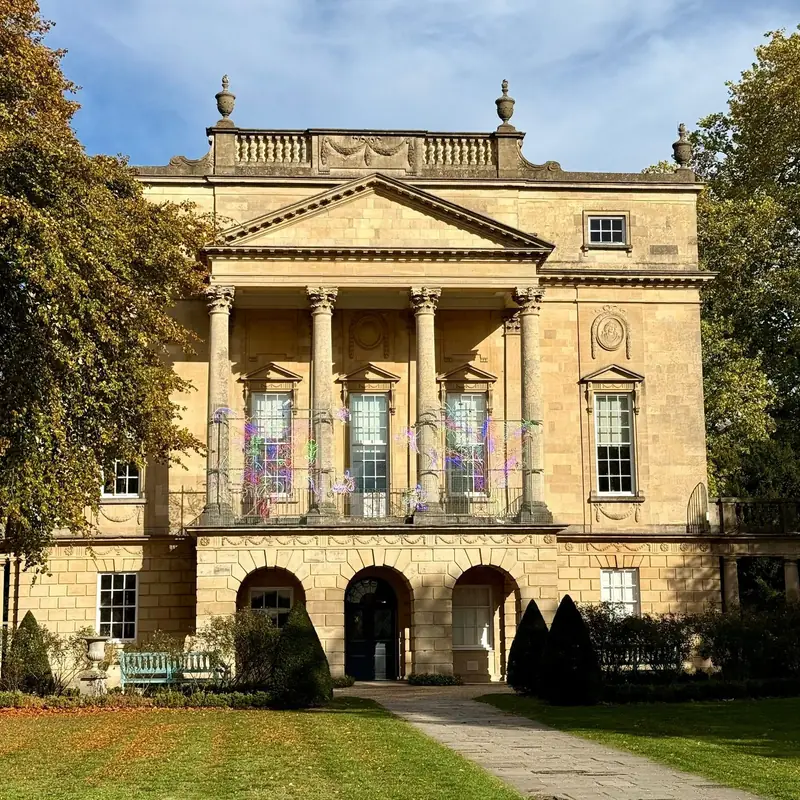
The Holburne Museum
Built in 1799 as the Sydney Hotel, the grand way into Sydney Gardens, and a museum since 1916.
-
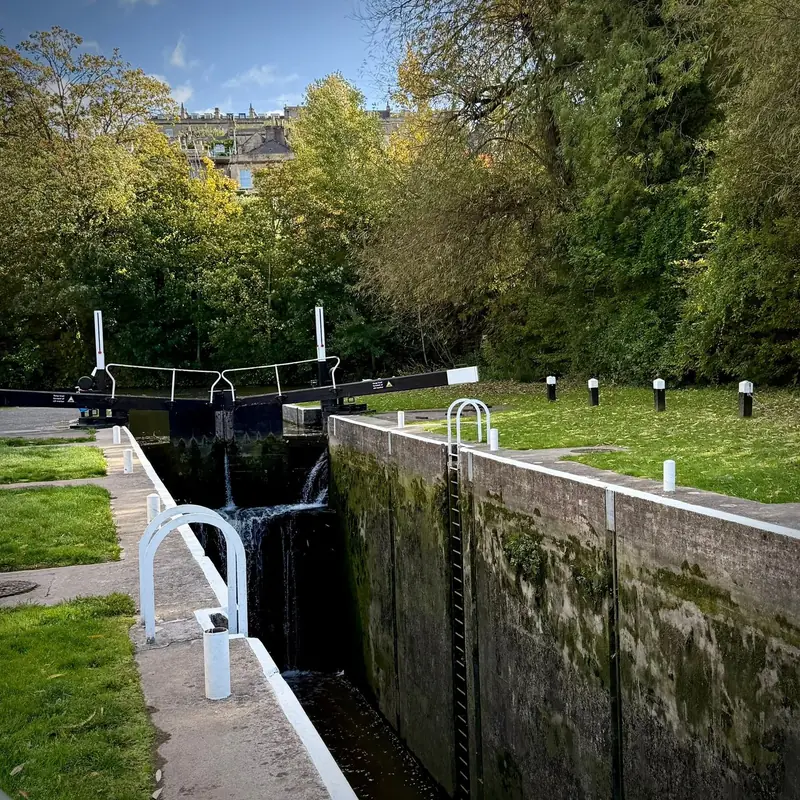
Bath Deep Lock
One of the deepest canal locks in Britain, at the bottom of the Widcombe flight.
-
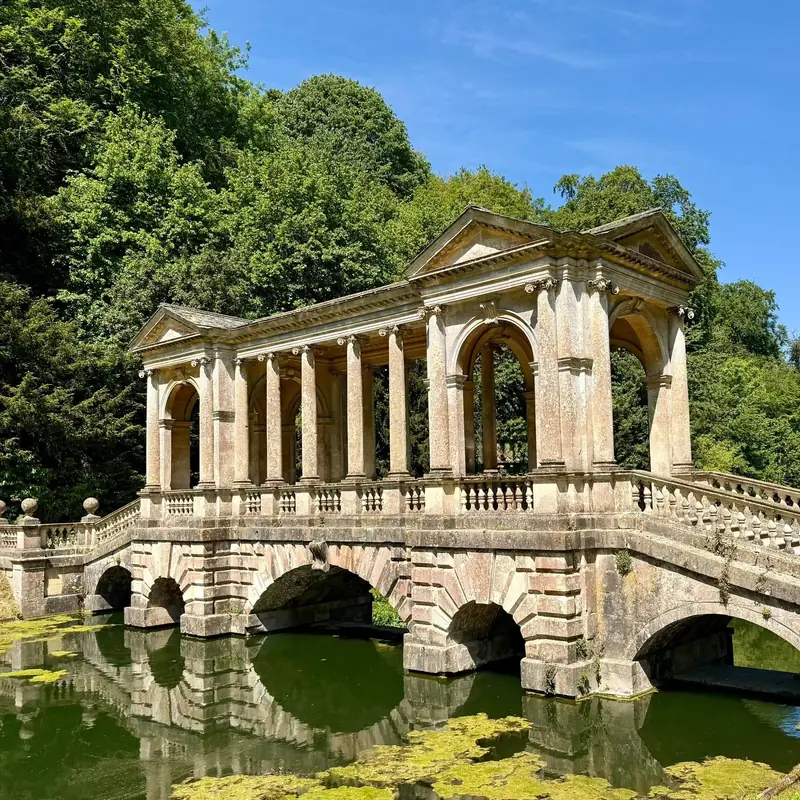
Prior Park
Ralph Allen's hillside estate and landscape garden, with its Palladian bridge and the view back over Bath.
-
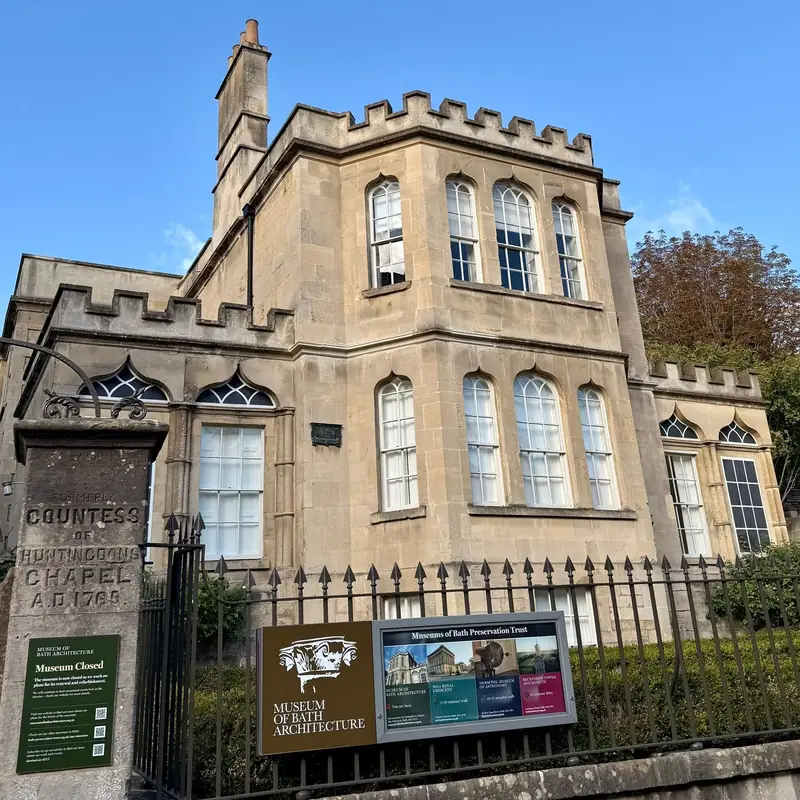
The Museum of Bath Architecture
The Countess of Huntingdon's Gothick chapel of 1765, now a museum of how Georgian Bath was built. Closed for repairs.
-
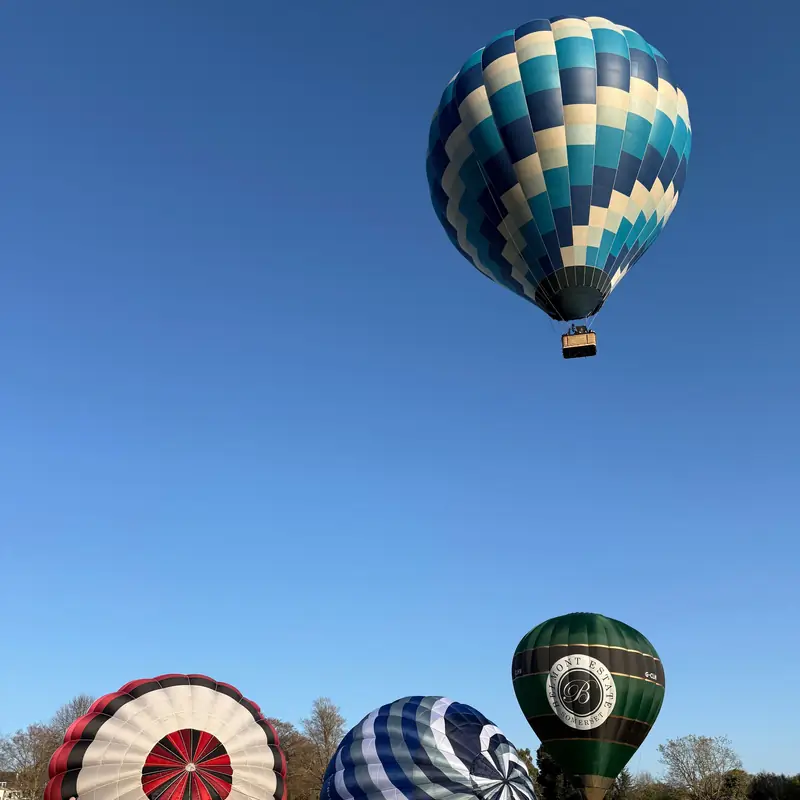
Lansdown Crescent
A hilltop crescent of 1789 to 1793 by John Palmer, curving into S-shaped wings along the contour.
-
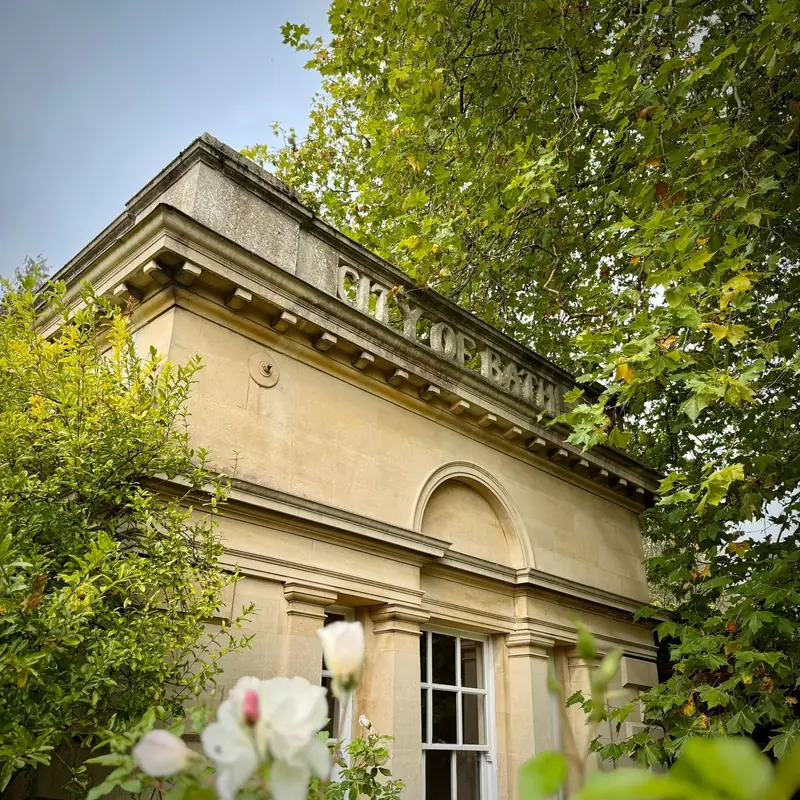
Bath Botanical Gardens
The greenest corner of the route, inside Royal Victoria Park, founded in 1887 on one naturalist's plant collection.
More tours in Bath
Take Bath at your own pace.
Download the app, put your headphones in and start at whichever stop is nearest.
App Store coming soon